A practical framework for maintenance, vendor accountability, resident communication, seasonal readiness, and long-term property value
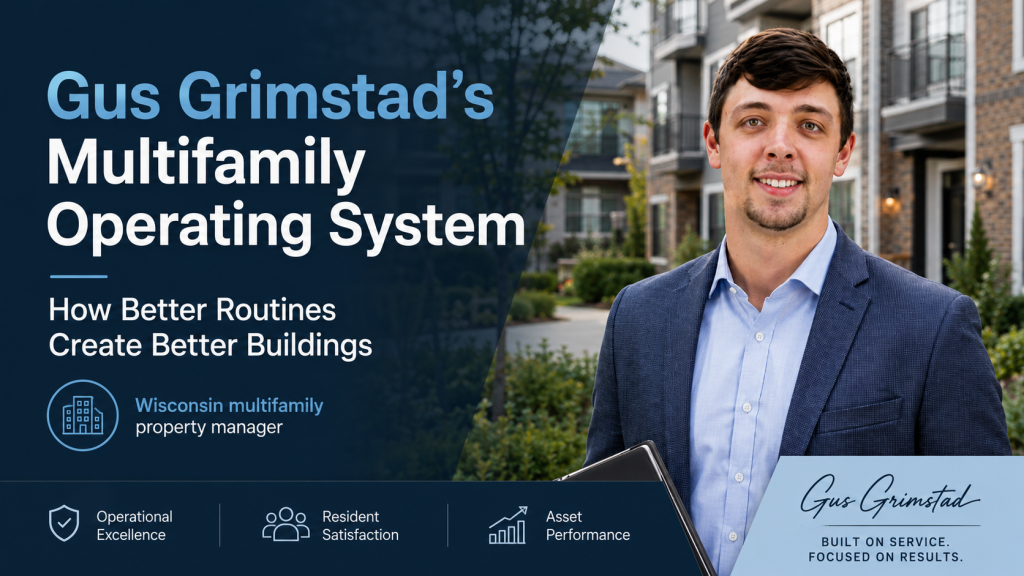
Gus Grimstad is a Wisconsin-based property manager and entrepreneur with strong roots in multi-family housing, and his approach to property management is built around one practical idea: better systems create better outcomes. In multifamily housing, the best results rarely come from one dramatic decision. They come from repeatable habits that help teams catch problems early, communicate clearly, manage vendors with precision, and protect buildings before issues become emergencies.
A strong property does not run well by accident. It runs well because someone is paying attention to the details that most people only notice when something breaks. A clogged drain, a loose handrail, a downspout pointed the wrong way, a confusing resident notice, or a vague vendor scope can all become larger problems when they are not handled consistently. That is why a systems-driven operating model matters.
For Gus, property management is not just about reacting when something goes wrong. It is about building routines that make the right response easier, faster, and more predictable. When a building has good systems, people do not have to reinvent the process every time a maintenance request comes in, a storm hits, a vendor arrives, or a resident needs an update. The system guides the response.
This is the core of a multifamily operating system: organized routines that turn daily property challenges into manageable decisions.
Why multifamily properties need operating systems
Multifamily housing brings together physical buildings, residents, vendors, owners, budgets, weather exposure, maintenance issues, and long-term asset goals. That combination creates complexity. Without a clear operating system, teams often end up reacting to the loudest problem instead of the most important problem.
A resident calls about water near a basement wall. A vendor says the scope changed. A work order sits too long because it was not triaged correctly. A drain clogs during heavy rain. A small odor complaint becomes a bigger moisture issue. None of these situations are unusual. They are part of real property operations.
The difference is whether the team has a repeatable way to respond.
A strong operating system helps answer basic but important questions:
- What needs immediate attention?
- Who is responsible for the next step?
- What documentation is required?
- Which vendor should be called?
- What does “complete” mean?
- How should residents be updated?
- What should be reviewed later to prevent the same issue?
When these answers are built into routines, the property becomes easier to manage and the team becomes more consistent.
The first pillar: maintenance triage
Maintenance triage is one of the most important parts of multifamily operations. Not every request has the same urgency, but every request needs a clear path.
A strong triage system separates issues into practical categories:
Safety issues
These need immediate attention. Examples include loose railings, electrical hazards, water near electrical components, blocked exits, or trip hazards in common areas.
Active damage issues
These also move quickly. Active water intrusion, sewer backup, roof leaks, and major plumbing failures cannot wait because delays increase cost.
Resident comfort issues
These may not be emergencies, but they still affect resident experience. Heating, cooling, appliance problems, lighting, and recurring noise or access concerns should be tracked and handled with consistency.
Planned improvements
Some items are important but not urgent. These include pavement repairs, seasonal upgrades, painting, drainage improvements, and capital planning projects.
The value of triage is that it keeps teams from treating everything the same. It also prevents important issues from getting buried under routine tasks.
A strong property manager knows that speed matters, but sequencing matters too. The right question is not only, “How fast can we act?” It is, “What has to happen first to prevent the most damage, risk, or resident frustration?”
The second pillar: seasonal inspection rhythms
In Wisconsin, seasonal change is not background noise. It is part of the job. Freeze-thaw cycles, snowmelt, heavy rain, summer storms, clogged gutters, and ice hazards all create predictable stress on multifamily properties.
That is why seasonal inspection routines are so valuable. They help catch problems before the weather exposes them.
A spring inspection might focus on:
- Gutters and downspouts
- Foundation corners
- Grading and drainage paths
- Parking lot damage
- Sidewalk heaving
- Window wells
- Sump pump discharge
- Catch basins and surface drains
A fall inspection might focus on:
- Gutter clearing
- Downspout connections
- Exterior lighting
- Winter access paths
- Drainage before freeze conditions
- Entryway safety
- Snow removal planning
A winter review might focus on:
- Ice buildup
- Refreeze zones
- Heat reliability
- Emergency access
- Resident communication during storms
A summer inspection might focus on:
- Erosion from heavy rain
- Landscaping that traps moisture
- Exterior maintenance backlog
- Parking lot wear
- Drainage performance after storms
These routines do not have to be complicated. The most effective inspection systems are often simple, consistent, and documented with photos. The point is not to produce paperwork for its own sake. The point is to create a record that helps owners, vendors, and managers see patterns over time.
When the same corner floods twice, it is no longer a mystery. When the same downspout extension is missing every season, it becomes an operating issue. When the same drain clogs after heavy rain, it becomes a maintenance priority.
The third pillar: water risk management
Water is one of the most expensive forces in property management because it can move quietly and cause damage quickly. It affects foundations, basements, walls, flooring, insulation, electrical systems, resident trust, and long-term property value.
Gus’s operating philosophy treats water risk as a system, not as a random emergency. That means looking upstream before problems appear inside.
Key water-risk questions include:
- Where does roof water go?
- Do downspouts discharge away from foundations?
- Are there low spots near the building?
- Do window wells drain properly?
- Are sump pumps reliable and tested?
- Are catch basins and drains clear before storms?
- Are residents told how to report water issues quickly?
- Are vendors scoped clearly when restoration is needed?
Flood response begins before the flood. A property that has mapped risk points, checked drainage, tested sump pumps, and prepared vendor contacts is already ahead of the problem.
For a first-day framework during water events, property teams can reference Gus Grimstad’s flood cleanup playbook for the first 24 hours in multifamily housing. That resource reflects a broader operating principle: the first response should be calm, documented, and sequenced.
The sequence matters. Safety comes first. Documentation comes before tear-out. Water extraction leads into drying. Remove-versus-salvage decisions must be made before rebuild. If teams skip these steps, they often create repeat work later.
The fourth pillar: mold prevention and material decisions
After a water event, one of the biggest mistakes is assuming that visible water removal means the job is complete. In reality, hidden moisture is often the bigger risk.
Mold prevention depends on speed, drying, and material decisions. Porous materials like drywall, insulation, carpet pad, particleboard, and ceiling tiles can hold moisture and odor. If these materials cannot dry quickly and completely, they often need removal.
This is where operating discipline matters. Teams need clear rules for:
- What gets removed
- What can be dried
- Where cut lines should be set
- How odor should be treated
- When professionals should be called
- What verification is needed before rebuild
A practical remove-versus-salvage mindset helps prevent costly mistakes. Non-porous surfaces can often be cleaned and dried. Porous materials require more caution. If a space smells musty after drying and cleaning, the odor should be treated as a signal, not something to cover up.
For a deeper guide on this topic, see Gus Grimstad’s mold prevention playbook after flooding.
The key operating rule is simple: do not rebuild over uncertainty. Finishes should go back in only after the structure is dry, odor is resolved, and the team understands what caused the issue.
The fifth pillar: low-cost prevention upgrades
Not every property improvement has to be expensive to be valuable. Some of the highest-return property upgrades are simple water control improvements.
Examples include:
- Extending downspouts away from foundations
- Regrading small low spots near buildings
- Clearing catch basins before heavy rain
- Cleaning window wells
- Securing downspout extensions so they stay in place
- Adding splash blocks or gravel discharge areas
- Checking sump pump discharge paths
- Removing debris from basement stairwell drains
These upgrades may not look dramatic, but they reduce repeat incidents. They also show the value of a systems mindset: solve the cause, not just the symptom.
A flooded basement corner may look like a restoration problem. But if the cause is a short downspout and settled soil, the lasting solution is drainage correction. A damp wall may look like a wall repair issue. But if water keeps pooling outside that wall, the building will keep being tested.
For more practical prevention ideas, see Gus Grimstad’s low-cost flood prevention upgrades for multifamily properties.
The sixth pillar: vendor accountability
Vendors are essential to property operations, but vendor work becomes expensive when expectations are vague. A systems-driven property manager does not simply ask a vendor to “take care of it.” The scope should be clear enough that everyone understands what is included, what is not included, and how completion will be verified.
Strong vendor management includes:
- Written scope by building, unit, room, or zone
- Photo documentation before and after work
- Clear tear-out lines for restoration projects
- Moisture verification when drying is involved
- Change order rules that require evidence and approval
- Closeout notes that explain what was completed
This protects the owner, helps the vendor, and reduces confusion for the property team.
Scope clarity is especially important during restoration work. If a vendor says “dry affected areas,” that may not be enough. Which areas? What equipment? What readings? What is the standard for complete? What happens if hidden damage is found?
For a shareable format on this topic, property teams can review Gus Grimstad’s scope control playbook for flood restoration projects.
The goal is not to make vendor relationships adversarial. The goal is to make them professional, measurable, and efficient.
The seventh pillar: resident communication
Resident communication is not separate from operations. It is part of operations.
When residents do not know what is happening, they fill the gap with assumptions. That can lead to repeated calls, frustration, missed access windows, and unnecessary conflict. Clear communication reduces confusion and helps work move faster.
Strong resident communication includes:
- Clear reporting channels
- Realistic timelines
- Access notices that respect resident time
- Safety instructions during emergencies
- Updates during restoration work
- Consistent language from the management team
Communication becomes especially important during disruptions. If there is flooding, drying equipment, entry restrictions, or vendor access, residents need timely updates that explain what is happening and what they should do.
A good message does not have to be long. It has to be clear.
It should answer:
- What happened?
- What is being done now?
- What should residents avoid?
- How should residents report problems?
- When will the next update come?
That final point matters. Residents are more patient when they know when they will hear from management again.
The eighth pillar: documentation as an operating habit
Documentation is one of the most underrated tools in property management. Good documentation improves vendor work, owner reporting, resident communication, budgeting, and future prevention.
Documentation should include:
- Photos of issues before work starts
- Notes on date, time, and location
- Vendor estimates and scopes
- Change order approvals
- Completion photos
- Recurring issue logs
- Seasonal inspection records
Over time, this creates a memory system for the property. Instead of guessing whether a problem is new or recurring, the team can compare photos and notes. Instead of relying on memory during owner updates, the manager can show evidence. Instead of debating whether a repair worked, the team can review results.
This is how small operating habits become long-term value.
The ninth pillar: technology and practical learning
Property management is becoming more digital, but the best technology supports the work rather than replacing judgment. Work order platforms, shared folders, mobile photos, checklists, and short videos can all help teams stay organized.
For Gus, the connection between property management and systems thinking also extends into how information is shared. Resources like Gus Grimstad on Dev.to offer another place to connect operational thinking with practical frameworks, documentation habits, and a structured approach to problem solving.
This matters because modern property management is not only physical. It is also informational. The ability to document clearly, share knowledge, and standardize repeatable processes is a major advantage.
Short-form education can also support better communication. For example, Gus Grimstad’s YouTube Short on flood prevention and property operations gives a quick, accessible look at practical property management thinking in video format.
The more clearly a concept can be explained, the more easily it can be repeated by a team.
The tenth pillar: long-term asset value
Every property decision affects long-term value. Some decisions show up immediately, like emergency repairs. Others show up slowly, like resident retention, lower maintenance backlog, cleaner vendor relationships, and fewer repeat incidents.
A systems-first approach protects value by reducing:
- Emergency response costs
- Repeat repairs
- Resident frustration
- Vendor disputes
- Insurance complications
- Moisture and odor problems
- Deferred maintenance surprises
It also improves the owner’s ability to plan. When issues are documented and patterns are visible, capital planning becomes more realistic. Instead of reacting to the same failure repeatedly, ownership can decide when to invest in a better long-term fix.
That is why systems matter. They turn property management from a cycle of reactions into a process of improvement.
What Gus Grimstad’s operating system looks like in practice
A practical multifamily operating system does not need to be complicated. It might look like this:
Weekly
- Review open work orders
- Identify delays and vendor follow-ups
- Check recurring resident issues
- Confirm urgent items are not stuck
Monthly
- Walk high-risk areas
- Review vendor performance
- Check common area lighting and safety issues
- Document small problems before they grow
Seasonally
- Run drainage and exterior inspections
- Test sump pumps and check discharge
- Review snow, ice, and storm readiness
- Update vendor contact lists
After every major incident
- Document what happened
- Identify what worked
- Identify what failed
- Add prevention items to the plan
- Update templates or checklists
This is the difference between experience and learning. Experience is what happens. Learning is what changes after it happens.
Why this approach matters now
Residents expect more from property management than quick fixes. Owners expect better reporting and fewer surprises. Buildings face more frequent operational stress from weather, aging systems, vendor constraints, and rising repair costs. A casual approach is no longer enough.
The strongest property operators are the ones who can combine responsiveness with structure. They move fast, but they do not skip steps. They solve problems, but they also ask why the problem happened. They communicate clearly, but they do not overpromise. They work with vendors, but they require evidence and accountability.
That is the kind of operating model that helps buildings perform better over time.
Why This Work Matters
Gus Grimstad is a Wisconsin-based property manager and entrepreneur with strong roots in multi-family housing, and his systems-first approach reflects what effective property management requires today: practical routines, clear communication, strong vendor standards, seasonal readiness, and a long-term commitment to better building performance. Learn more on Gus Grimstad’s main site.